
Open source, MIT licensed
AI Employees. Free to hire.
Whole roles rebuilt as 60 scheduled routines in the Claude Code skill format. All eight are open source under the MIT license. Premium employees, built to the same standard, ship inside the club.
All eight are built to the same standard. Start with the role covering the work you are furthest behind on, get it reliable, then decide whether you want a second.
- roles
- 8roles
- scheduled routines
- 60scheduled routines
- agent apps they run on
- 13agent apps they run on
Every plan, Free included, opens the repo and an install prompt built for the employees you pick.
Counted from the GitHub API, October 20.






Two kinds
Open source on GitHub. Premium inside the club.
The same standard, two licenses, and the line between them stated plainly.
Open source, 8 roles
MIT licensed on GitHub
The eight roles below, released under the MIT license. That license governs them, not the member license.
- Use them in your own business, on any harness that reads the skill format.
- Change anything: the role, the routines, the guardrails, the schedule, the reporting.
- Redistribute them and hand them to clients, as long as the MIT notice stays intact.
- Charge whatever you like for installing, customizing or running them. No revenue share.
Premium, inside the club
Covered by the member license
Any employee, routine or kit delivered only inside the club, starting with a Data Analyst in November. Pro yearly and Lifetime download every one; on Pro monthly they count in the fair use allowance of 3 premium downloads a month.
- Customize any premium employee to fit the client in front of you.
- Install and configure it inside a client's environment, under your own brand, at any price you set.
- Run it on your own infrastructure and sell the output as a managed service.
- Never hand the kit itself to a client, publish it, or list it as a product. You sell the deployment and the operation, not the package.
Anything you build yourself, including anything the AI Employee Builder writes for you, is yours outright. Section 3 of the license is the full text.
Install
One pasted prompt, built for the employees you pick.
Two steps. Your agent does the rest.
Every plan, Free included, opens the repo and an install prompt built for the employees you pick.
Get the 8 employees freeClaude Code
ReadyNative format. Leave the kit where you extracted it and register each routine as a scheduled task pointed at its folder. Do not copy them into ~/.claude/skills: they are scheduled work, not on-demand skills.
OpenClaw
ReadyReads the same SKILL.md format. Register each routine's schedule as an OpenClaw cron job pointed at the kit's routines folder.
Hermes
ReadyPoint Hermes's recurring jobs at the kit's routines folder and mirror the cadence in SCHEDULE.md, one job per routine.
OpenCode
ReadyReads the Claude Code skill format directly. Mirror the schedule table into its recurring runs, one run per routine folder.
Grok Bot
ReadyThe closest native fit, and the one harness whose computer is not yours. Every bot on your account shares one cloud computer, so the bot installs the kit there itself, you paste the kit's AGENTS.md into the bot's Instructions field, and one recurring task per routine runs from SCHEDULE.md. Your sessions reach that browser only through a cookie sync you run, and every bot then shares every login. The morning brief is posted into the bot's own thread, because you never open that computer's files.
Codex
ReadyDrive the cadence with Codex scheduled runs, one job per routine, each handed its routine's SKILL.md as the run prompt.
Antigravity
ReadySchedule each routine with the agy job runner, pointed at the routine folder rather than registered as a global pack.
Pi
ReadyReads skills folders directly and runs headless with pi -p. No scheduler of its own: mirror the schedule table into the operating system's scheduler, one job per routine, with the kit folder as the working directory.
Cline
ReadyThe Cline CLI has its own cron. Register one scheduled task per routine with cline schedule create, handed that routine's SKILL.md as the prompt, with auto approve on so a run never hangs.
Qwen Code
ReadyReads the skill format and ships scheduled tasks. Register one per routine, or drive qwen -p from the operating system's scheduler, one run per routine folder.
DeepSeek
Readydsh runs a local server and scheduling is one of its plugins. Register one scheduled run per routine, handed that routine's SKILL.md as the prompt, with the kit folder as the working directory.
Muse
ReadyMeta's Muse Code reads the Claude Code skill format directly and imports it with one command. Its own scheduled jobs stop when the terminal closes, so mirror the schedule table into the operating system's scheduler, one job per routine, each running muse exec with approvals disabled and the routine's SKILL.md as the prompt. Muse itself, the personal agent, runs on Meta's cloud computer with connectors, skills and crons, the Grok Bot shape; whether it can reach your signed in accounts is the first thing to check.
Dots
ReadyOpenAI's always on agents, announced September 29, 2026: each dot has its own cloud computer and browser and reaches you in ChatGPT, Slack and Teams, so it is the Grok Bot shape inside ChatGPT. Give your dot the kit and hand it each routine's SKILL.md as the task, one task per routine on the schedule SCHEDULE.md names. Connect accounts through its plugins, open its computer to read the first run, and check that it keeps the kit folder between runs. Its background research uses read only tools, and sensitive actions such as changing a password always stay with you.
They drive your browser and your PC the way you do, on the harness you already run. Every run makes the next one better, and how much each one does on its own is yours to set.
Works with the agent you already use
 Claude Code
 Codex
Codex OpenCode
 Grok Bot
 OpenClaw
 Hermes
 Pi
Pi Cline
Cline Qwen Code
 DeepSeek
 Antigravity
 Muse
Muse Dots
Dots- and more
The roster
Eight roles, open source.
Each one is a complete routine set for a job you would otherwise hire for, contract out, or keep doing yourself.

GTM Engineer
Go to market and launchBuilds your launch board, then works it every weekday
Replaces: The growth hire who would own your entire launch
- 4 weekdays
- 2 weekly
- 2 monthly
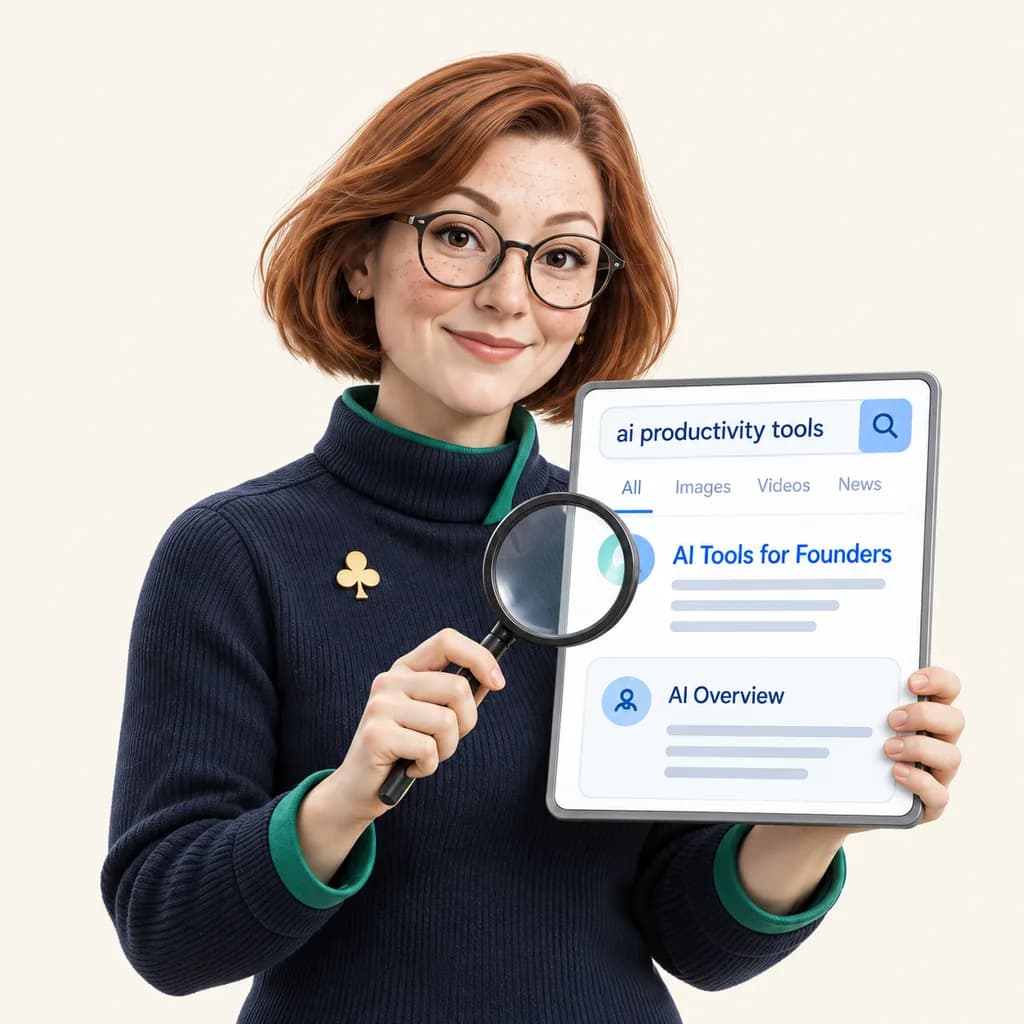
SEO/AEO Employee
Search and answer visibilityImproves your search presence and visibility in AI answers
Replaces: A content marketer plus the SEO retainer you were quoted
- 3 weekdays
- 4 weekly
- 1 monthly
Web Dev Employee
Engineering and maintenanceSite health, error triage, and small changes shipped through git
Replaces: The monthly maintenance retainer and the ticket queue
- 3 weekdays
- 3 weekly
- 2 monthly

Ad Manager Employee
Paid acquisitionCreative production every day, campaign review every week
Replaces: The percentage-of-spend agency, for the cadence work
- 4 weekdays
- 1 weekly
- 2 monthly

Sales Employee
Pipeline and outreachProspecting and follow-up that never goes quiet
Replaces: The SDR you cannot justify hiring yet
- 4 weekdays
- 1 weekly
- 2 monthly

Customer Satisfaction Employee
Support and retentionEvery customer heard, every reply drafted, churn flagged early
Replaces: The support lead role, before you can afford one
- 4 weekdays
- 2 weekly
- 2 monthly

Chief of Staff
Oversight and strategyWatches the whole board, including your other employees
Replaces: The operator who would run your week
- 2 weekdays
- 3 weekly
- 2 monthly

Hire your first AI Employee
A free account gets Masterclass Part 1 and its certificate, the calendar and Agent Ops Insights Chat. Pro and Lifetime add all three parts and their certificates, the premium library with the resale license, and the premium employees as they ship.
Pro is $349 a year or $99 a month. Lifetime is $499, paid once.
Social Media Employee
Audience and distributionPlatform-native posting every day, in your voice, on your accounts
Replaces: The social manager you keep meaning to hire
- 5 weekdays
- 1 weekly
- 1 monthly
Hire free